
Positioning & Messaging in B2B SaaS: What They Are and Why They Matter
How Strategic Positioning and Clear Messaging Drive Differentiation, Demand, and Sales in B2B SaaS

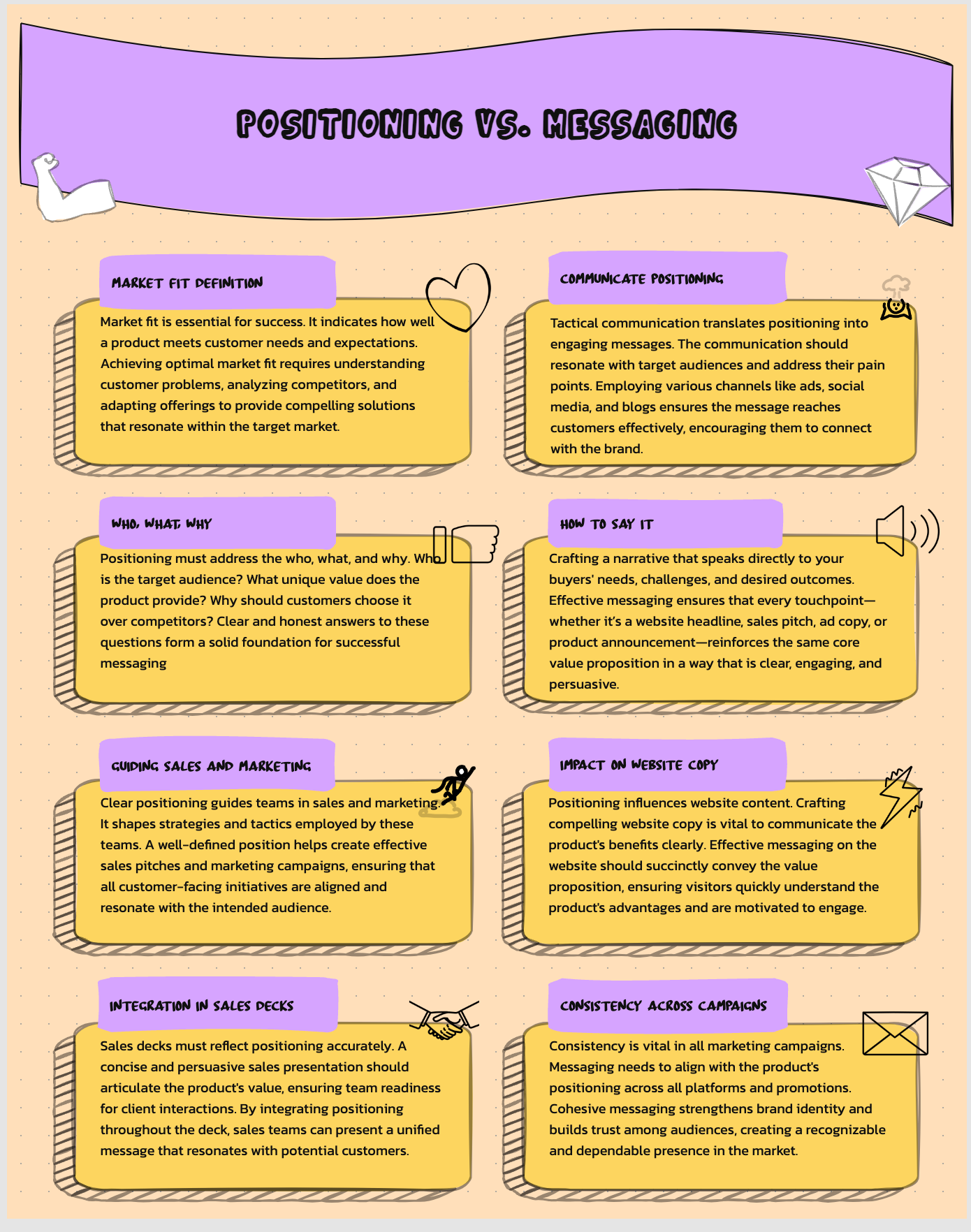
If you’ve spent any time in product marketing, you’ve probably heard “positioning” and “messaging” thrown around like they’re interchangeable. But here’s the deal—they’re not the same thing.
Positioning is about defining where your product fits in the market and how it stands out. Messaging is how you communicate that position to the world in a way that actually resonates with customers.
Get these right, and you’ll have a product that sells itself. Get them wrong, and you’ll spend a lot of time explaining (and re-explaining) what your product does and why anyone should care.
Let’s break it down.
What is Positioning?
Positioning is the strategic foundation of your product’s identity in the market. It answers:
✅ Who is this for?
✅ What problem does it solve?
✅ How is it different from competitors?
✅ Why should customers choose it over alternatives?
Without clear positioning, your product is just another SaaS tool lost in a sea of lookalikes.
How to Nail Positioning in B2B SaaS
Start with Your Ideal Customer – If you try to be everything to everyone, you’ll resonate with no one. Define your target audience—who they are, their pain points, and what success looks like for them.
Identify the Problem You Solve – Not the features. Not the bells and whistles. The actual business pain your product eliminates.
Find Your Competitive Edge – Your differentiator isn’t just a feature—it’s what makes you meaningfully better or different. Maybe it’s your ease of use, integrations, AI-powered automation, or hands-on support. Whatever it is, make it impossible to ignore.
Align with Market Trends – Your positioning should be relevant. If customer expectations shift, so should how you frame your product’s value.
🚨 Pro Tip: Your positioning isn’t a tagline. It’s an internal strategy that guides messaging, sales enablement, and go-to-market efforts.
What is Messaging?
Messaging takes your positioning and turns it into words that capture attention, create urgency, and drive action. It’s what makes your value clear, compelling, and repeatable.
Messaging tells the story of your product—why it exists, why it matters, and why customers should care right now.
Key Elements of Strong Messaging
✅ Value Proposition – The big, bold statement that instantly tells customers why they should choose your product.
✅ Core Messaging Pillars – The 3-5 key themes that reinforce your value, typically based on your differentiators.
✅ Customer-Focused Language – If your messaging is all about your product and not about your customer, you’ve already lost them. Speak to outcomes, not just features.
✅ Proof Points – Nobody takes your word for it. Back up claims with data, case studies, or testimonials.
✅ Consistency Across Channels – Your messaging should be the same whether it’s on your website, sales pitch, or ad campaign. If your sales team says one thing and your website says another, you have a problem.
Positioning vs. Messaging: What’s the Difference?
PositioningMessagingDefines where your product fits in the marketCommunicates that position in a way that resonatesStrategic, internalTactical, externalAnswers who, what, whyAnswers how to say itGuides sales, marketing, and product teamsShows up in website copy, sales decks, and campaigns
Think of positioning as the blueprint and messaging as the finished house. You need a solid foundation before you start decorating.
Why Positioning & Messaging Are Critical in B2B SaaS
B2B buyers don’t impulse buy. They research, compare, and scrutinize every detail before making a decision. If your positioning isn’t clear or your messaging doesn’t resonate, they’ll move on.
Here’s why strong positioning and messaging make or break SaaS growth:
They make differentiation clear – If you don’t tell buyers why you’re different, they’ll assume you’re just like everyone else.
They shorten sales cycles – When sales reps don’t have to constantly explain what you do and why it matters, deals close faster.
They align teams – Everyone—marketing, sales, customer success—should be speaking the same language. Consistent messaging = trust.
They drive demand – Strong messaging connects with prospects on a deeper level, making your product the obvious choice.
Final Thoughts
Positioning and messaging aren’t just marketing buzzwords. They’re the foundation of how your product is perceived and sold. Without them, your product is just another option in a crowded market.
If you want to win in B2B SaaS, you need to define where you stand and communicate that position in a way that resonates. Nail these, and your product won’t just get noticed—it’ll get chosen.